
Agoramoorthy of Thiruvenkadu
Agoramoorthy of Thiruvenkadu
Lord Shiva is revered as the Supreme Being who manifests in countless divine forms to protect His devotees and restore dharma. Among His many manifestations is Aghora Moorthy, the powerful and awe-inspiring form associated with Lord Shiva’s Aghora face.
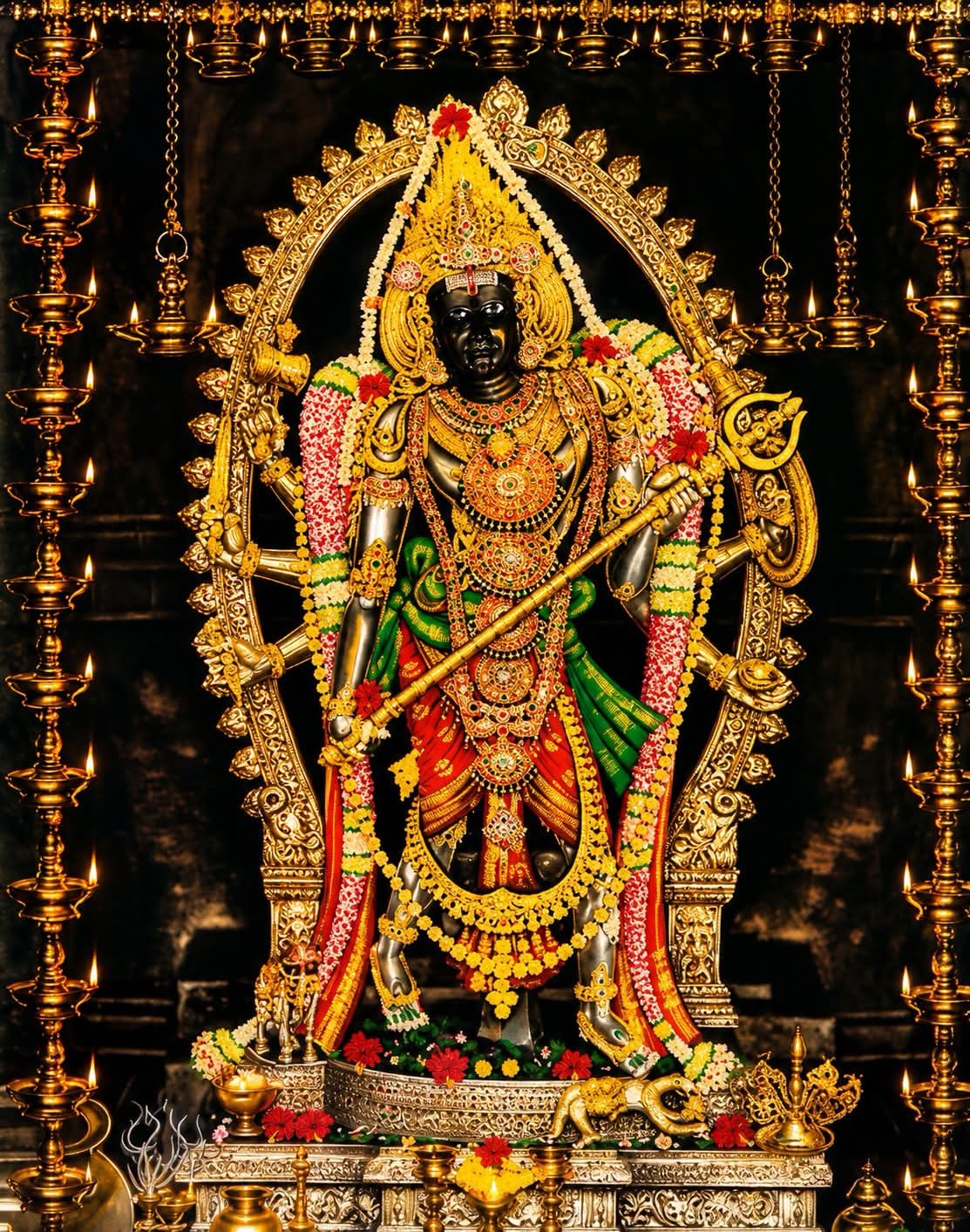
According to tradition, Lord Shiva possesses five faces:
- Ishanam
- Sathyojatham
- Tatpurusham
- Vamadevam
- Aghoram
Aghora Moorthy is the manifestation of Lord Shiva emerging from the Aghora aspect, representing His fierce power that destroys evil, protects devotees, and restores peace.
At Thiruvenkadu, in the sacred Swetharanyeswarar Temple in Mayiladuthurai district, Lord Aghoramurthy is worshipped in a separate shrine. This unique shrine attracts devotees seeking protection, courage, relief from difficulties, and divine blessings.
The Story of Aghora Moorthy
The legend of Aghora Moorthy is closely connected with an Asura named Maruthuvasuran.
Long ago, Maruthuvasuran performed intense penance and worshipped Lord Shiva while standing amidst the vast sea. Pleased with his devotion and severe austerities, Lord Shiva appeared before him and asked what boon he desired.
Maruthuvasuran requested the Trident (Trishula) of Lord Shiva.
Lord Shiva, pleased with his penance, granted the trident to him without hesitation.
However, after obtaining this powerful weapon, Maruthuvasuran became arrogant and began using it to trouble the Devas and ordinary people. His cruelty caused great suffering, and the Devas were unable to tolerate his actions.
They approached Lord Shiva and prayed for protection.
Nandi Devar Faces Maruthuvasuran
Hearing the prayers of the Devas, Lord Shiva summoned Nandi Devar and instructed him to investigate the matter.
Nandi Devar approached Maruthuvasuran and questioned him about the suffering he was causing to the Devas and the people.
The Asura became furious.
In his anger, Maruthuvasuran attacked Nandi Devar with the trident that Lord Shiva had given him. He struck Nandi and broke one of his horns, causing severe wounds to his body.
Despite his injuries, Nandi Devar returned to Lord Shiva.
When Lord Shiva saw Nandi Devar standing before Him covered in blood and wounded by the Asura, His divine anger arose.
The Manifestation of Aghora Moorthy
Lord Shiva’s fury became immensely powerful. From His fifth face, the Aghora face, a blazing divine flame emerged.
From this tremendous energy, Lord Shiva manifested as Aghora Moorthy.
This form represents the extraordinary power of Lord Shiva to destroy evil and protect those who surrender to Him.
The appearance of Aghora Moorthy filled the surroundings with divine intensity. Witnessing the terrible manifestation of Lord Shiva, Maruthuvasuran realized the greatness of the Supreme Lord.
The Asura surrendered before Aghora Moorthy.
Aghora Moorthy Forgives the Asura
Although Aghora Moorthy manifested in a fierce form, His divine nature is ultimately compassionate.
Once Maruthuvasuran surrendered, Lord Aghora Moorthy’s anger subsided. He forgave the Asura and blessed him.
The Asura then made a humble request to Lord Shiva. He asked that devotees who came to worship Aghora Moorthy should receive His blessings and have their sincere prayers fulfilled.
Lord Shiva accepted the request.
Thus, Aghora Moorthy came to be worshipped as a powerful and compassionate form of Lord Shiva at Thiruvenkadu.
The Divine Form of Aghoramurthy
The iconography of Lord Aghoramurthy at Thiruvenkadu is particularly magnificent and spiritually significant.
The deity is depicted in a powerful form adorned with various symbolic elements, including:
- A skull
- A garland of skulls
- A spear
- Numerous venomous creatures
- A majestic and powerful divine countenance
These features symbolize Lord Shiva’s mastery over fear, death, destructive forces, and negative energies.
Although the form appears fierce, devotees understand Aghora Moorthy as a protector and compassionate guardian who destroys obstacles and grants blessings to those who surrender with devotion.
Nandi Devar at the Feet of Aghora Moorthy
One of the most distinctive aspects of the Aghora Moorthy shrine at Thiruvenkadu is the presence of Nandi Devar at the Lord’s feet.
Nandi, who had previously been wounded by Maruthuvasuran, is depicted resting uninjured at the feet of Aghora Moorthy.
This represents the divine grace of Lord Shiva and His protection of His faithful devotee.
The Asura Maruthuvasuran, after surrendering to Lord Shiva, is also depicted at the feet of Aghora Moorthy.
The presence of both Nandi and the Asura provides a powerful reminder of the Lord’s compassion:
Those who surrender to Lord Shiva receive His grace, regardless of their past actions.
The Ashta Bhairavas at Thiruvenkadu
The presence of the Ashta Bhairavas, the eight manifestations of Lord Bhairava, is another important spiritual feature associated with Thiruvenkadu.
The eight Bhairavas represent different aspects of Lord Shiva’s protective and powerful energy.
Devotees traditionally worship the Ashta Bhairavas seeking:
- Protection from negative influences
- Removal of obstacles
- Courage and strength
- Peace and prosperity
- Spiritual growth
- Success in life
- Relief from difficulties
- Divine protection
Worshipping these forms of Bhairava is considered especially significant by devotees visiting this sacred temple.
Lord Nandi and Pradosha Worship
Within the temple, Lord Nandi is enshrined before the sanctum of Lord Swetharanyeswarar.
According to the traditional Swetharanyeswarar Puranam, worshipping Nandi, who possesses immense spiritual significance, on Pradosham is believed to provide special spiritual benefits.
Pradosham is an auspicious period dedicated to Lord Shiva and is traditionally observed with special prayers, Abhishekam, and worship.
Devotees visit the temple during Pradosham to seek Lord Shiva’s blessings, protection, peace, and spiritual upliftment.
Masi Pooram and the Aghora Moorthy Festival
The manifestation of Aghora Moorthy is traditionally associated with the Pooram star in the Tamil month of Masi.
This sacred occasion is commemorated every year during the temple’s annual festival.
The celebration takes place as an important part of the festival observances and is traditionally regarded as the fifth day of the festival.
Devotees gather to offer prayers to Aghora Moorthy and seek His blessings on this spiritually significant occasion.
Aghora Puja on Sunday Nights
A special Aghora Puja is performed for Lord Aghora Moorthy every Sunday night.
This worship is considered particularly important by devotees of the deity.
It is traditionally believed that devotees who participate in the Aghora Puja with sincere faith and devotion receive the Lord’s blessings and may have their heartfelt wishes fulfilled.
Devotees visit the shrine to pray for:
- Removal of obstacles
- Protection from difficulties
- Family welfare
- Success in their endeavours
- Peace of mind
- Prosperity
- Fulfilment of sincere wishes
Karthigai Aghora Puja
The Tamil month of Karthigai is considered especially sacred to Lord Shiva.
At Thiruvenkadu, special Abhishekam and Aradhana are traditionally performed for Aghora Moorthy throughout the night on the third Sunday of Karthigai.
Devotees consider this night an especially auspicious opportunity to offer prayers and receive the grace of Aghora Moorthy.
The night-long worship creates a deeply spiritual atmosphere, with devotees participating in Abhishekam, Aradhana, prayers, and other traditional rituals.
Spiritual Significance of Aghora Moorthy
The word Aghora is associated with the absence of fear and the transformation of destructive forces.
The story of Aghora Moorthy teaches an important spiritual message.
Lord Shiva’s fierce form is not merely a representation of anger. It represents the destruction of evil, protection of the innocent, restoration of righteousness, and compassion towards those who surrender.
Maruthuvasuran received a powerful weapon but used it for destructive purposes. When he finally understood his mistake and surrendered to Lord Shiva, the Lord forgave him.
Thus, the Aghora Moorthy legend reminds devotees that:
Divine power destroys evil, protects devotees, and ultimately offers compassion to those who surrender with a sincere heart.
Aghora Moorthy Temple at Thiruvenkadu
The shrine of Aghora Moorthy is located within the sacred Swetharanyeswarar Temple at Thiruvenkadu, one of the renowned Shiva temples of Tamil Nadu.
Thiruvenkadu is traditionally associated with Budhan (Mercury) among the Navagraha temples and is also celebrated for the unique worship of Aghora Moorthy.
The combination of Lord Swetharanyeswarar, Goddess Brahmavidyambigai, Lord Aghora Moorthy, Nandi Devar, and the Ashta Bhairavas makes the temple an important destination for devotees seeking both spiritual and divine protection.
Why Devotees Worship Aghora Moorthy
Devotees traditionally approach Lord Aghora Moorthy with faith and devotion seeking His blessings for:
- Protection from evil and negative influences
- Removal of obstacles
- Courage and mental strength
- Family welfare
- Prosperity and success
- Relief from difficult circumstances
- Spiritual growth
- Fulfilment of sincere prayers
The most important aspect of Aghora Moorthy worship is faith, surrender, and devotion.
A Sacred Message from Aghora Moorthy
The story of Aghora Moorthy is more than a story of divine anger.
It is a story of protection, justice, surrender, forgiveness, and grace.
Nandi Devar’s devotion represents the faith of a true devotee. Maruthuvasuran’s surrender represents the transformation that can occur when one recognizes divine power. Aghora Moorthy’s forgiveness demonstrates that Lord Shiva’s fierce appearance ultimately arises from His compassion and His desire to protect His devotees.
At Thiruvenkadu, devotees continue to worship this magnificent manifestation of Lord Shiva and seek His divine blessings.
Aghora Moorthy stands as a powerful symbol of Lord Shiva’s ability to destroy darkness, protect His devotees, remove obstacles, and shower grace upon those who surrender at His feet.
Related Posts


About The Author

